




AV-over-IP GCC deployments are no longer defined by what equipment is installed — they are defined by how well that equipment performs inside a network.
Corporate headquarters, universities, broadcast facilities, hospitality developments, and government projects increasingly demand systems that are scalable, remotely manageable, and integrated across audio, video, control, and lighting. AV-over-IP is now a central part of meeting that demand.
But the shift to networked AV creates a design challenge that many projects underestimate: AV-over-IP is not a cabling upgrade. It is an infrastructure decision. And the integrators who succeed on these projects are the ones who treat it that way from the first design meeting.
This guide outlines what GCC-based integrators, consultants, and project teams need to consider — technically and strategically — before committing to a networked AV design.
What AV-over-IP GCC System Design Actually Requires
AV-over-IP — Audio-Visual over Internet Protocol — replaces traditional point-to-point signal distribution with network-based transmission using encoders, decoders, switches, and control interfaces.
The practical benefit is scalability. A traditional matrix system has fixed physical limits. An AV-over-IP system can expand by adding endpoints to the network, provided the infrastructure is correctly dimensioned from the outset.
Platforms such as WyreStorm NetworkHD are purpose-built for this: high-quality audio and video distribution over standard network infrastructure, with the flexibility and scalability that commercial projects in the GCC now routinely require.
The critical point for integrators: the product choice is secondary to the network design. A well-chosen encoder on a poorly designed switch infrastructure will fail. A well-designed network makes the product perform as specified.

Why GCC Projects Raise the Stakes
The scale of AV-over-IP GCC projects regularly exceeds that of those integrators encounter elsewhere. A hospitality development in Dubai may require AV distribution across 200 rooms, multiple ballrooms, restaurants, a lobby, and a pool deck — all operating concurrently, all requiring different content, and all expected to operate without intervention.
A government facility or broadcast studio may have zero tolerance for system downtime. A university campus may need to serve 40 classrooms, three auditoriums, and a media production suite from a single infrastructure.
AV-over-IP is well-suited to these environments precisely because it supports:
- Flexible routing across rooms, floors, and buildings
- Scalable expansion without replacing cabling infrastructure
- Centralized control and monitoring across zones
- Integration across audio, video, lighting, and control systems
But the larger the project, the less forgiving the design tolerance. GCC projects demand that network architecture, bandwidth planning, latency requirements, and audio integration be resolved at the design stage — not during commissioning.
Seven Design Decisions That Determine Project Outcome
1. Bandwidth and Network Capacity
Project scale across the GCC regularly exceeds that encountered elsewhere. A hospitality development in Dubai may require Bandwidth planning is the foundation of any AV-over-IP system. The required capacity depends on video resolution, compression method, frame rate, number of simultaneous streams, and audio channel count.
A corporate meeting room distributing 1080p presentation content has fundamentally different network requirements from a hotel ballroom routing 4K content across 12 zones simultaneously. Integrators must calculate expected network load before specifying switches, uplinks, and cabling topology — not after.
2. Latency Requirements
Different applications carry different latency thresholds. Digital signage can tolerate a brief delay. Live performance, broadcast monitoring, interactive training, esports arenas, and camera-to-screen applications cannot.
Product selection must reflect the application. Some AV-over-IP platforms prioritize visually lossless video quality; others are optimized for ultra-low latency. Specifying the wrong platform for a live performance venue is a design error that cannot be fixed by configuration.
3. Video Resolution and Compression
Not every AV-over-IP platform is appropriate for every project. Meeting rooms and classrooms have different requirements from broadcast production suites, medical simulation facilities, or high-end visualization environments.
When specifying platforms such as WyreStorm NetworkHD, match the product series to the verified use case. AV-over-IP is not a single-platform category.
4. Audio Integration
Audio is consistently the element that determines whether an end user considers the system successful — and consistently the element that receives the least design attention at the start of a project.
In GCC projects, audio requirements are rarely simple: corporate meetings require reliable conferencing; auditoriums require intelligible speech reinforcement; universities need audio routing between rooms; broadcast facilities require professional audio workflows; live venues need monitoring, mixing, and zone-level distribution.
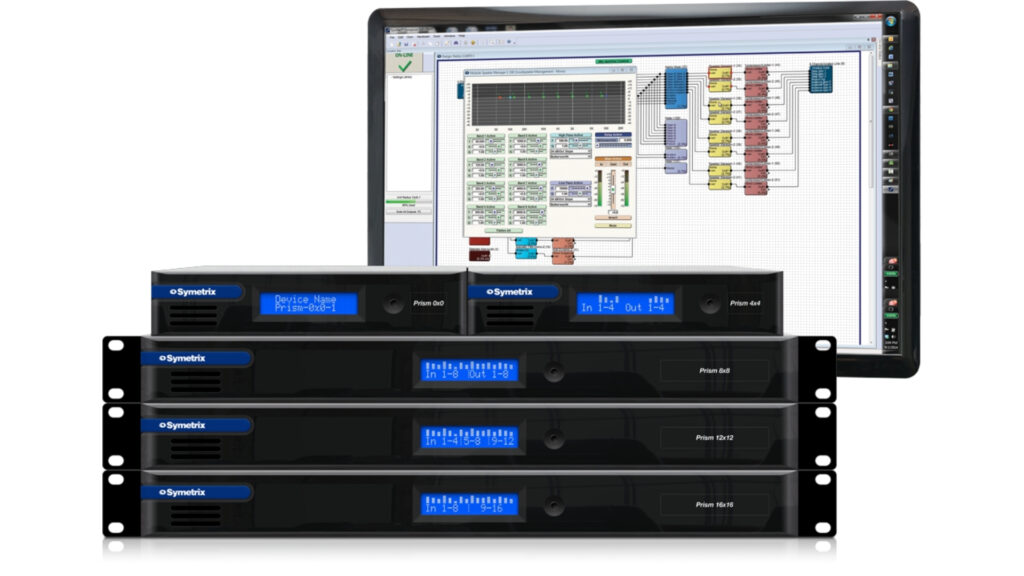
Dante-enabled DSP is the appropriate integration approach for most networked AV environments. Symetrix provides DSP platforms designed specifically for AV-over-IP installations, including the D100 IP DSP Server — an enterprise-class processing server for high Dante-channel-count environments with complex audio management requirements. Because Dante supports AES67, Symetrix Dante-enabled DSPs can also transmit and receive audio with other IP-based audio networking systems, supporting interoperability in multi-vendor installations.
Audio must be designed into the system from the outset, not added during final fit-out.
5. Control System Planning
The technical sophistication of an AV-over-IP system must not translate into operational complexity for the end user. A facilities manager, lecturer, event technician, or presenter should be able to operate the system without needing to understand the network topology.
Control design for GCC projects typically requires: touch panel interfaces, room presets, source selection logic, display and audio level control, scene recall, monitoring and diagnostics, and — particularly in hospitality and government environments — integration with lighting and building management systems.
Control planning should be part of the initial design brief, not a final-stage configuration task.

6. Network Security and IT Alignment
AV-over-IP systems sit within the client’s network environment. This means they are subject to the client’s IT governance, security policies, and infrastructure constraints.
For enterprise, government, education, and broadcast projects — all common in the GCC — network segmentation, VLAN planning, access permissions, device management, and remote access policy must be agreed with the IT team before design is finalized.
AV and IT must be aligned from Day 1. Projects that bring IT in at the commissioning stage routinely face delays in VLAN configuration, IP address allocation, security approval, and sign-off.
7. Redundancy and Failover
In broadcast studios, command centers, major hospitality venues, and live event environments, downtime is not recoverable. Redundancy must be designed into the system — not treated as an optional premium.
This includes: redundant network paths, backup switching, failover audio routing, spare endpoints, documented troubleshooting procedures, and confirmed local access to support. Redundancy is a design requirement, not a commercial upsell.
Common Design Errors in GCC AV-over-IP Projects
The most avoidable mistakes on AV-over-IP GCC projects fall into four categories.
Treating AV-over-IP as a cabling substitute. The technology depends on multicast management, IGMP snooping, QoS policies, VLAN structure, and proper uplink dimensioning. These are not background details. They are system-critical.
Engaging IT too late. This is the single most common cause of commissioning delays on networked AV projects. IT alignment is a design-phase requirement.
Underspecifying audio. Projects that focus on video distribution and treat audio as an add-on consistently underperform in end-user satisfaction. DSP, Dante, conferencing audio, paging, and monitoring must be specified early.
Choosing products without confirming regional support. In the GCC, product availability, local technical support, and after-sales coverage directly affect project delivery timelines and long-term system reliability. A product without a regional support structure is a project risk.
Applications Across GCC Verticals
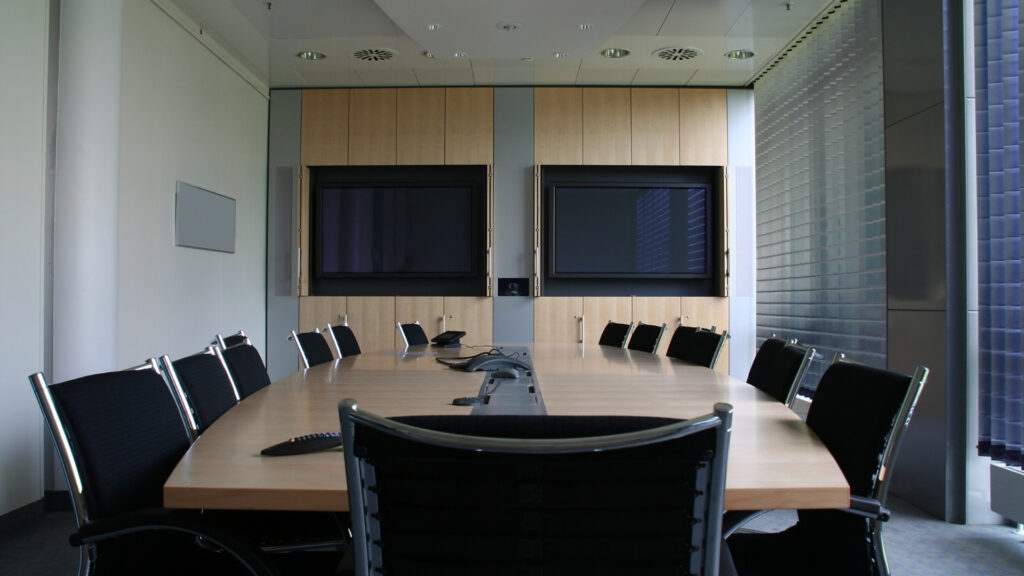
Corporate and boardrooms: Flexible content sharing, multi-display environments, divisible spaces, video conferencing integration, and centralized control — combined with DSP and networked audio for reliable meeting-room performance.
Universities and training centers: Scalable distribution across classrooms, lecture halls, auditoriums, and recording facilities, with the ability to expand without recabling.
Hotels and hospitality: Flexible zone-based routing across ballrooms, restaurants, lobbies, and event spaces — allowing venue teams to reconfigure for different events without system rebuilds.
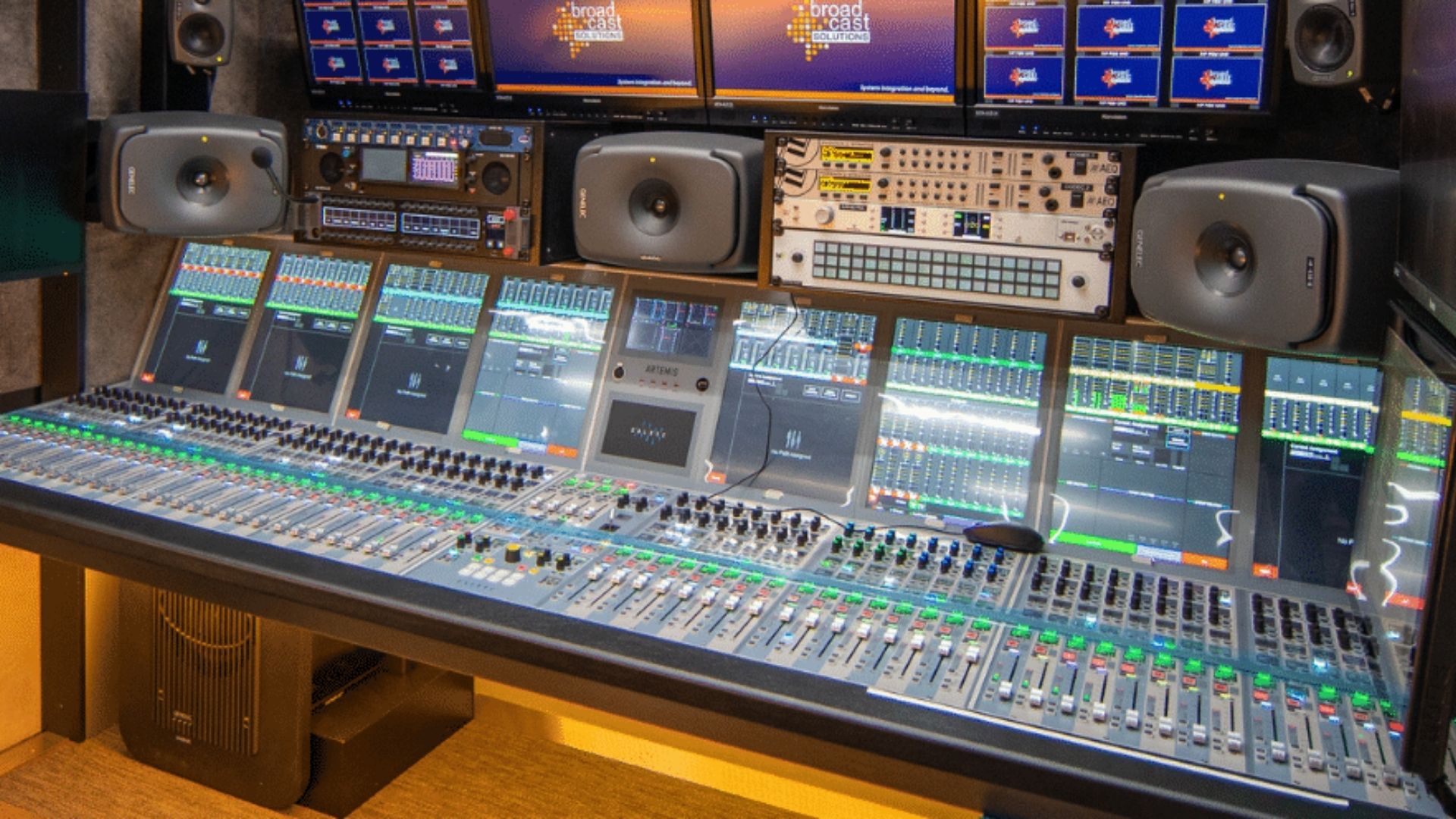
Broadcast and production facilities: Reliable signal flow, professional monitoring, audio routing, and integration across technical rooms. Calrec is relevant in broadcast audio workflows where professional mixing and IP-based production infrastructure are part of the design brief. GSL Professional includes Calrec in its portfolio, supporting its positioning across broadcast and production-grade AV.
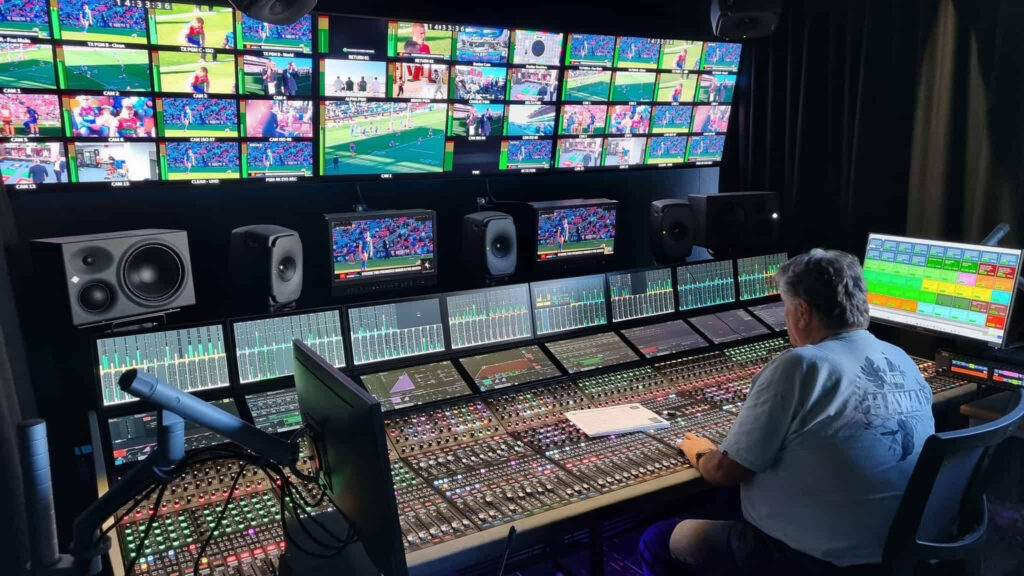
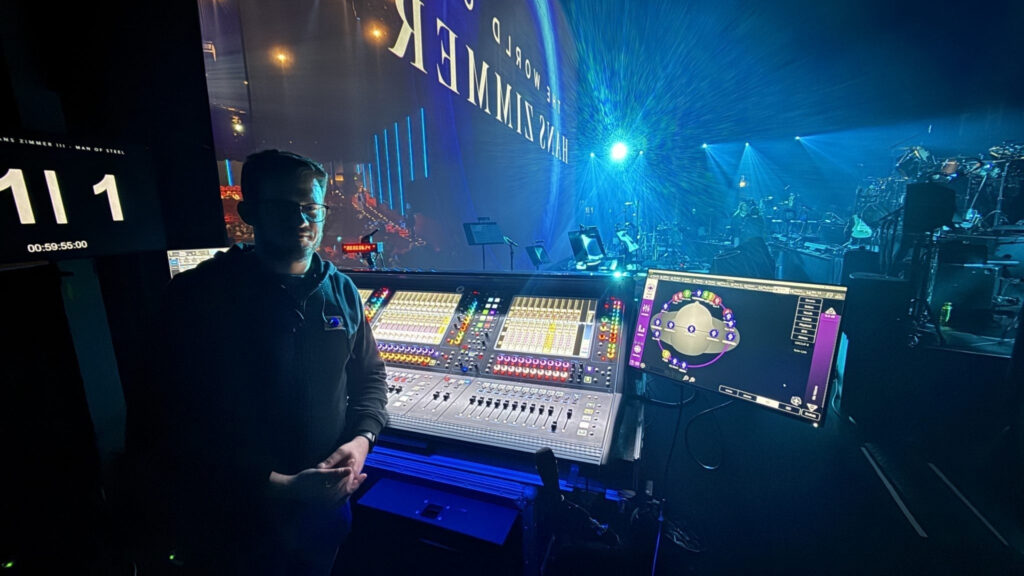
Live venues and performance spaces: Networked audio routing, monitoring, and control are increasingly standard in live production environments. KLANG immersive monitoring systems are well-suited to large-scale performance and orchestral applications that require personal mixing workflows for monitoring engineers.
Retail, experience centers, and signage: Multi-zone content distribution, showroom control, and dynamic content routing across experiential environments.
GSL Professional’s Role in Networked AV Projects Across the GCC
Product specification is only one part of delivering a successful AV-over-IP system. Integrators and consultants also need access to technical knowledge, verified regional stock, pre-sales consultation, and reliable after-sales support — particularly on complex, multi-system projects.
GSL Professional distributes professional audio, video, lighting, and control systems across the GCC, with active coverage across the UAE, Saudi Arabia, Qatar, and the wider region. As an authorized distributor across AVL and control platforms, GSL provides integrators and consultants with access to the technical guidance, product availability, and regional support required for demanding networked AV projects.
For AV-over-IP GCC system design, GSL’s portfolio spans the complete system: video distribution and AV-over-IP routing; Dante-enabled DSP and networked audio; broadcast audio; live sound and immersive monitoring; control system integration; lighting and AVLC environments; and regional after-sales support.
Modern AV projects across the GCC are rarely single-category. A corporate headquarters, broadcast facility, or major hospitality development requires audio, video, control, processing, and monitoring to function as one integrated system. GSL’s positioning across these categories makes it a relevant technical partner from design stage through to long-term operation.
Before You Finalize the Design
AV-over-IP delivers scalability, flexibility, and long-term adaptability that fixed AV infrastructure cannot match. But that performance depends entirely on design decisions made before a single product is specified.
Bandwidth, latency, audio integration, control, security, redundancy, and regional support are not configuration items. They are design requirements. The earlier they are resolved, the more reliably the final system will perform — and the lower the risk of commissioning delays, end-user dissatisfaction, or costly post-installation remediation.
Planning a networked AV or AV-over-IP project in the GCC? Speak with GSL Professional’s technical team for pre-sales consultation, system design guidance, and regional support across audio, video, lighting, and control.